


ETF investing for beginners in Belgium (2026)
If you're new to investing, ETFs are one of the simplest ways to get started.
When we first tried to invest, we were overwhelmed. Too many products and a lot of jargon. Everyone had a different opinion and thankfully ETFs cut through that noise, and they've become the go-to choice for beginners in Belgium for good reason.
This short guide explains what ETFs are, what to watch out for in Belgium (especially taxes), and how to take your first steps.
What is an ETF?
An ETF, short for exchange-traded fund, is a fund you can buy on the stock exchange, just like a stock. But instead of investing in a single company, one ETF can hold hundreds or even thousands of companies.
That's the big advantage: diversification. You're not betting everything on one stock. Most beginner-friendly ETFs are index ETFs. Rather than trying to beat the market, they simply track it. For example, an ETF tracking the MSCI World index follows the performance of over 1,500 companies across developed economies. Look at how it's performed historically:
If markets rise over the long run, the ETF tends to rise too. But prices do move up and down in the short term, sometimes sharply. That's completely normal. ETFs work best when you have a long time horizon, ideally 10 years or more.
Why ETFs are popular in Belgium
ETFs combine three things beginners need:
- Diversification in one product. A single ETF like VWCE (its ticker, the short code used to find it on the stock exchange) holds over 3,700 companies worldwide. This means you don't have to buy each individual company's stock.
- Low fees. A typical bank fund in Belgium costs 1.5% to 2.5% per year. Most ETFs cost less than 0.5%, and many are below 0.2%. Over decades, that fee difference compounds into thousands of euros.
- Simplicity. Once you've chosen a sensible ETF or portfolio, there's very little to do. No stock-picking. No daily monitoring. Just regular investing and patience.
The main risk you need to understand
The biggest risk with ETFs is market risk. Your investment can drop 10%, 20% or more during a crisis. We've been there, and it's uncomfortable. But here's the thing most beginners get wrong: the biggest mistake isn't choosing the wrong ETF. It's panic selling after a fall.
Markets have always recovered over the long term. Selling during a dip is what locks in losses. If you need the money within five years, a portfolio of 100% stocks may be too volatile. In that case, adding bonds or choosing a more balanced portfolio can help smooth out the ride.
What to look for as a Belgian investor
A few details matter when you're choosing an ETF to invest in. Here's what to keep in mind when choosing an ETF.
Accumulating over distributing
Belgium taxes dividends at 30%. Distributing ETFs pay those dividends out to you, which triggers the tax. On the other hand, accumulating ETFs reinvest dividends inside the fund automatically. You never receive the dividend directly, so you avoid the tax.
For long-term investing, accumulating ETFs are the simpler, more tax-efficient default. It's also why Curvo only uses accumulating funds.
TOB: the transaction tax
Belgium charges a transaction tax (TOB) every time you buy or sell a security. For ETFs, the rate is either 0.12% or 1.32%, a big difference. The higher rate applies to ETFs registered in Belgium. ETFs registered elsewhere in the EU but not in Belgium get the lower rate. Since you pay TOB on every transaction, this can add up if you invest monthly.
The funds used by Curvo are not subject to TOB. That means you don't pay transaction tax when investing through Curvo, unlike most ETFs bought via a broker. If you invest monthly, this makes a real difference over time. No TOB on every contribution means more of your money stays invested and compounding.
What else to look out for
- Domicile: Look for ETFs domiciled in Ireland (ISIN starting with IE) or Luxembourg (LU). Ireland is often preferred for its tax treaties with the US.
- Currency: Buy a EUR listing on a European exchange to avoid broker currency conversion fees.
- Replication: Physical replication is simpler and carries less risk than synthetic.
- Cost (TER): Lower is better. Most good ETFs cost under 0.20% per year.
- Fund size: Choose funds with at least €100 million under management to avoid the risk of the fund shutting down.
For a deeper dive into this, see our complete guide to ETF investing in Belgium.
Belgian taxes: a quick overview for 2026
We briefly looked at the dividend tax and TOB. As a Belgian ETF investor, these are the primary taxes you'll deal with:
- TOB (0.12% or 1.32%) on every buy and sell.
- Dividend tax (30%), mainly relevant for distributing ETFs.
- Reynders tax (30%) on profits from bond-heavy funds.
- Capital gains tax (10%). Fortunately there's a €10,000 yearly exemption.
If you use a Belgian broker like Bolero or Saxo, they handle most of this for you. If you use a foreign broker like DEGIRO or Trade Republic, you may need to declare the account to the National Bank of Belgium and handle some taxes yourself.
The admin is manageable, but it's not zero. Curvo, for example, provides the exact figures and step-by-step guides you need for your annual tax declaration.
How to buy your first ETF
So far, we've explained what ETFs are and what to look out for in Belgium. But how do you actually buy one? You have two main routes.
Route A: DIY via a broker
You buy ETFs yourself on the stock exchange through a broker. The typical steps: open and fund your account, search the ETF by its ISIN code, choose a EUR listing, and place your order. A market order is the simplest option; a limit order gives you more price control.
The upside is full control and often lower transaction costs. The downside is that you're responsible for everything: choosing the right ETFs, rebalancing, and handling tax admin.
Not sure which ETF to choose as a beginner?
When we first started investing, the hardest part was not opening a broker account. It was choosing which ETF to buy. There are hundreds available in Europe, and most of them sound the same.
👉 Check out our guide to the best ETFs for beginners to see which ones are worth considering.
Route B: Hands-off with Curvo
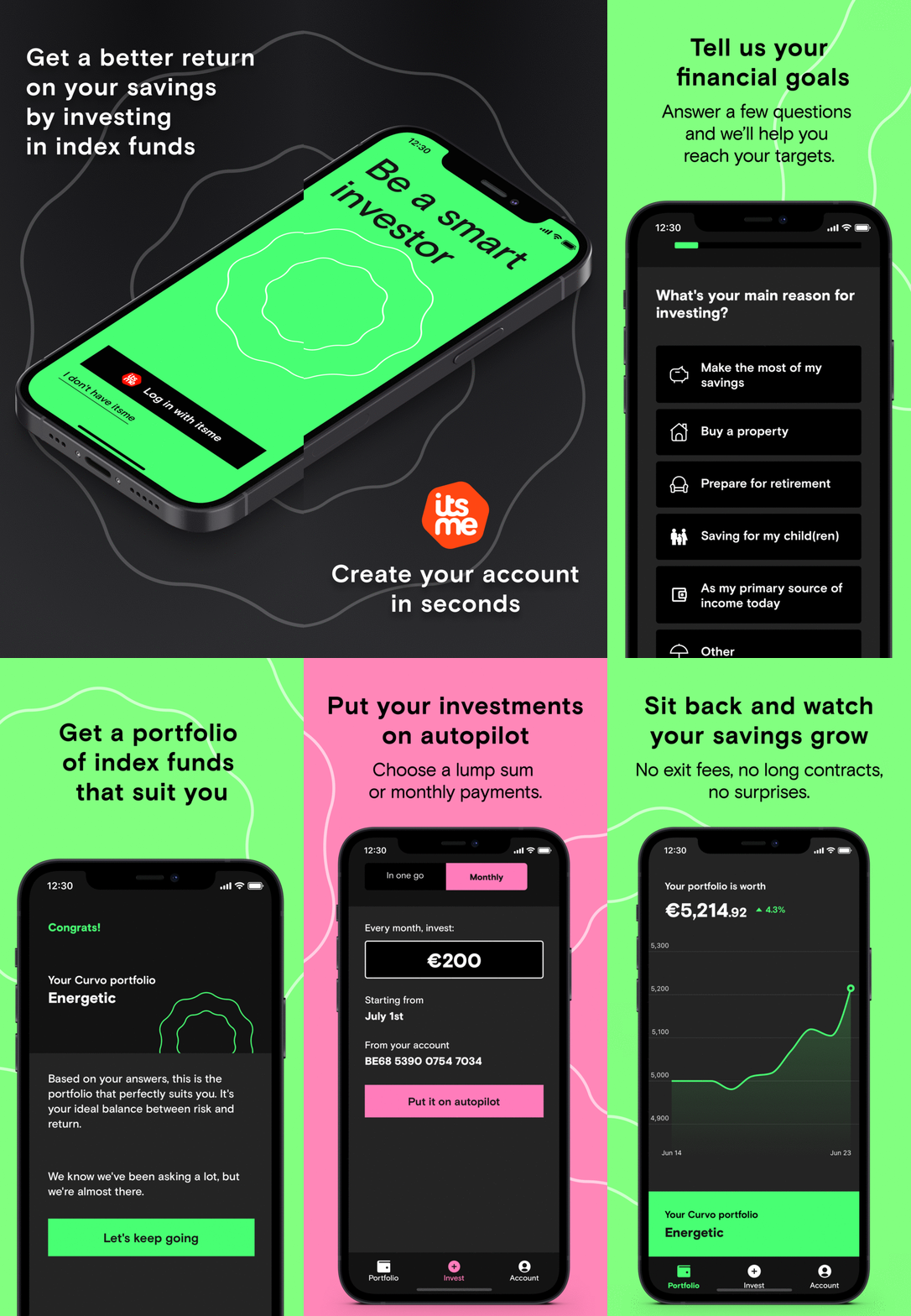
If you'd rather not compare ETFs, calculate allocations, or rebalance yourself, Curvo offers another way. You answer a few questions about your goals, time horizon, and risk tolerance. Based on that, we match you with a diversified portfolio of ETFs, tailored to you.
If your horizon is shorter or you're cautious about risk, your portfolio may include bonds to reduce fluctuations. There's no one-size-fits-all portfolio. The right one is the one that fits your situation.
You can automate monthly investing. No manual orders. No rebalancing stress. Just consistent investing on autopilot. Learn how it works.
Your action plan
Keep it simple. Here are six steps to get started in ETF investing:
- Build an emergency fund. Aim for 6 to 9 months of expenses before you invest and put it in savings account.
- Define your goal and time horizon. What are you investing for, and when will you need the money?
- Choose your approach. DIY broker or a managed solution like Curvo.
- Pick a simple, diversified ETF or portfolio. One global ETF is enough to start.
- Invest monthly. Automation beats trying to time the market.
- Review twice a year. Then stay the course.
Investing is not about constant action. It's about consistency.
For the full picture
Check out the book ETF Investing in Belgium: A Practical Guide by Thomas Ketchell, co-founder of Curvo. It takes you from zero to your first ETF investment, with all the Belgian tax details you need. Written in English.
👉 Get it on etfguide.be.
Summary
ETFs are popular in Belgium for a reason. They are simple to understand, low in cost, and give you instant diversification across thousands of companies around the world. Of course, there are tax details to consider and markets will fluctuate. But once you understand the basics, investing with ETFs is far less complicated than it first appears.
The most important decision is not finding the "perfect" ETF. It is choosing an approach you can stick with over the long term. You can manage everything yourself through a broker, or you can use a solution like Curvo and let the portfolio construction, rebalancing and administration be handled for you.
Either way, what matters most is starting with a clear plan and thinking long term. In investing, consistency beats complexity.