


How to invest €100,000 in Belgium
Having €100,000 to invest feels exciting, but also a bit scary. When we first reached this amount ourselves, we weren’t sure what to do next. Should we invest it all at once? Spread it out? Pick stocks? Look at real estate? And of course, how do taxes work in Belgium?
If you’re asking yourself the same questions, you’re not alone. In this guide we’ll help you understand your options in a simple and down-to-earth way. You’ll see the pros and cons of each approach, and how we would handle €100,000 if we were in your place.
The best way to invest €100,000 in Belgium
The smartest way for most Belgians to invest €100,000 is to put it into a globally diversified, low-cost portfolio of index funds or ETFs that match your risk level.
Why this works:
- You spread your money across thousands of companies around the world, not just a few big Belgian names.
- You keep your costs low, especially compared to the 1 to 2 percent many Belgian banks still charge.
- You avoid unnecessary taxes when you pick the right types of funds.
- You benefit from steady long-term growth without having to guess the right moment to buy or sell.
This is why index investing sits at the core of how Curvo helps you invest. It removes complexity and lets your €100,000 grow quietly in the background while you focus on the rest of your life.
Start with your goals
Before you invest your €100,000, take a moment to think about what this money is actually for. It sounds obvious, but most of us skip this step. And in Belgium, where we're used to keeping everything in a savings account, it matters even more.
Ask yourself the following questions.
When will I need this money?
Buying a home in five years is very different from retiring in 25 years. A short timeline calls for more stability. A long timeline can handle more ups and downs.
How much risk feels right for me?
Many Belgians are conservative by default because we grew up relying on regulated savings accounts. But with inflation and low interest rates, sticking to cash often means your money quietly loses value.
What's the purpose?
Maybe you want more freedom. Maybe you want to help your children. Maybe you want to retire early. Your "why" affects how much risk you can live with.
Your answers shape your risk profile, which decides how much of your portfolio should be in:
- Stocks for long-term growth
- Bonds for stability
Belgium's long history of low interest rates means that, for long-term goals, stock-heavy portfolios usually make more sense. They give your €100,000 the best chance to grow faster than inflation.
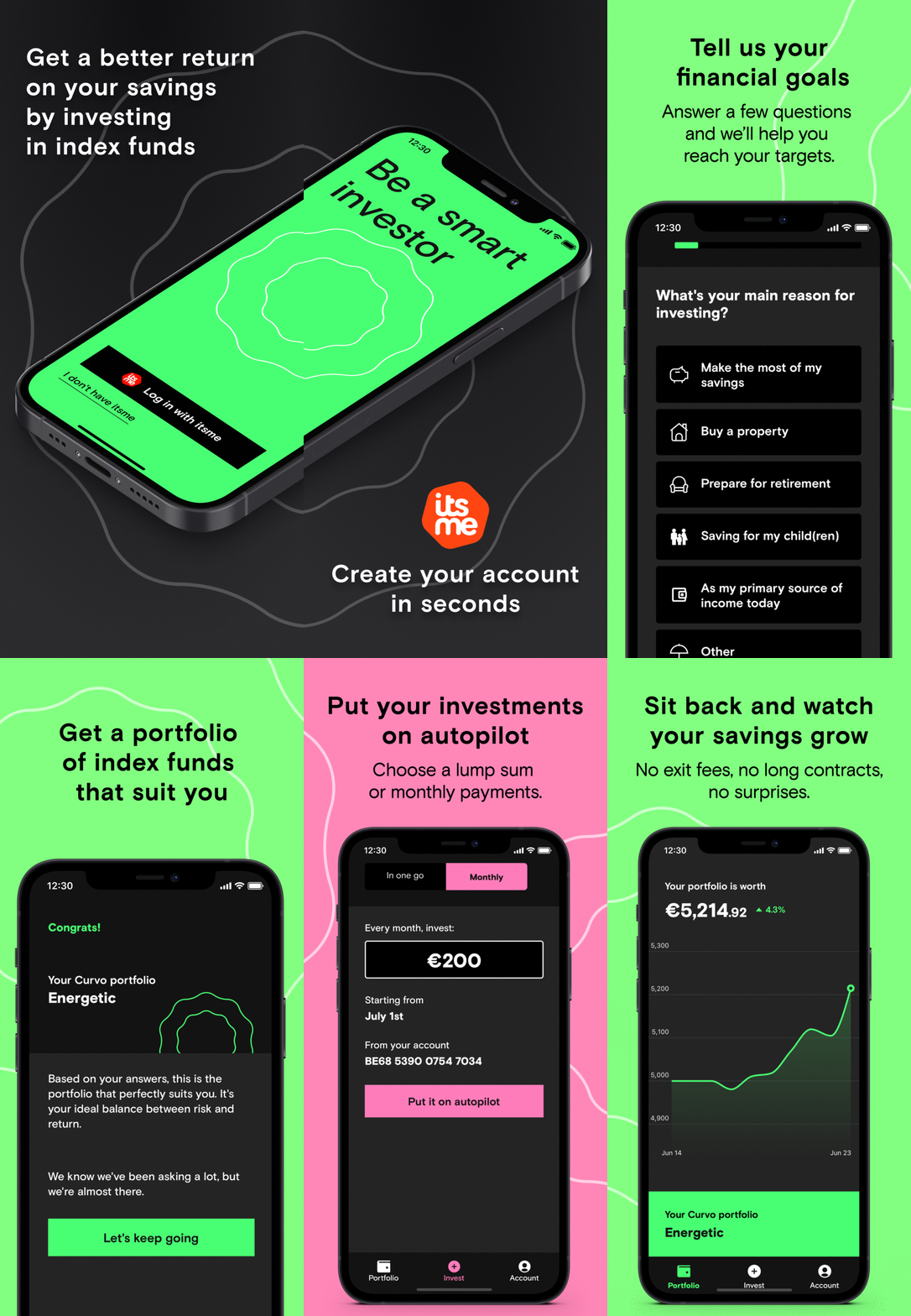
When investing with Curvo, this matching happens automatically when you sign up. We ask you a few questions on your goals and tolerance for risk. We then assign you the best Curvo portfolio that matches your goal.
Here's a simple rule of thumb if you want to determine it yourself:
- Aggressive → 90 to 100 percent stocks, if you invest for 15 years or more
- Balanced → 60 to 80 percent stocks
- Conservative → 20 to 40 percent stocks
ETFs: probably the best investment
There's a wide variety of investments for Belgians and we understand it can get confusing to know where to start. There are many ways you can invest your money, going from stocks, to wine, art and even digital art through NFTs. But not all are equally good. Many are too risky, or do not yield sufficient returns. When investing for your future and over the long-term, it's important you make a rational and well-thought out decision.
Here's look at some of the options:
| Investment | Notes |
|---|---|
| Bonds | Governments or corporations issue bonds as fixed-income investments. Government bonds, like the Belgian state bond, are safer. Corporate bonds offer higher returns but are riskier. |
| Stocks | Stocks let you invest in companies. You can share their profits via dividends and capital gains. They carry a higher risk, but they can yield significant long-term growth with careful selection. |
| ETFs | Exchange-Traded Funds (ETFs) are diversified investments that track an index, sector, or asset class. They are cheap and perfect for beginners. They are diverse and easy to trade. |
| Pension saving | Optimising your pension savings is crucial for a secure retirement. In Belgium, using tax-efficient pension schemes can boost your savings. Third-pillar pension funds are one such scheme, but they have low returns compared to ETFs. |
| Real estate | Real estate investing means buying property. The goal is to make money from rent or by selling it for more than you paid. It is a tangible asset with potential for steady cash flow and long-term value growth. |
| Crypto | Cryptocurrencies like Bitcoin are volatile digital assets. They can yield high returns but are risky. They suit those with a high risk tolerance. |
At Curvo, we fundamentally believe in ETFs which we believe are best suited for putting your money to work over the long-term.
ETFs vs individual stocks
With individual shares, you buy a piece of one company. This means that your return depends entirely on how that one company performs. We have tried this ourselves, and it is time-consuming to do proper research. Moreover, you concentrate all your risk on a few companies.
ETFs offer automatic diversification. With a single purchase, you invest in hundreds of companies at once. This significantly reduces your risk.
ETFs vs real estate
Real estate is one of the most popular investment in Belgium, but it has downsides:
- high transaction costs (registration duties, notary fees)
- concentration risk (one asset in one location)
- maintenance and rental management
- lower liquidity compared to ETFs
A globally diversified ETF portfolio avoids these frictions and spreads risk across thousands of companies worldwide. Real estate still makes sense for those who want physical assets, but it should not automatically replace diversified investing.
ETFs vs traditional fund from your bank
These are actively managed funds in which a fund manager tries to beat the market. Traditional banks often charge 1 to 2 percent per year for their investment funds. These fees quietly eat into your returns.
Global ETFs, on the other hand, usually cost between 0.07 and 0.22 percent. Look at the difference with investing in a fund by the Belgian bank KBC and an ETF like IWDA offered by iShares.
Over 20 years, the difference can be worth tens of thousands of euros. When costs stay low, more of your money gets to grow. This is one of the main reasons index investing consistently outperforms expensive active funds.
ETFs vs savings accounts
Savings accounts are safe but usually offer returns that don't even keep pace with inflation. In the long term, you lose purchasing power. Investing in the stock market involves risk, but that risk is rewarded with higher returns. For long-term goals, they are much more effective than savings.
The ideal ETF portfolio for a Belgian
If you want to manage your own portfolio, or you simply want to understand what Curvo uses behind the scenes, here's what a clean and robust ETF setup looks like. It follows the same principles we use at Curvo: keep costs low, diversify globally and avoid unnecessary taxes.
Step 1: Pick a global equity ETF
Your main source of growth will come from stocks. A single global ETF already gives you exposure to thousands of companies around the world.
Good examples are the following ETFs:
- Vanguard FTSE All-World UCITS ETF (VWCE)
- iShares MSCI ACWI UCITS ETF (IMIE)
- iShares MSCI World UCITS ETF (IWDA)
Step 2: Add bonds
Bonds are there to calm the ups and downs. You want your "safe" assets to stay stable, so choosing EUR-hedged bonds as a Belgian investor prevents currency movements from shaking your bond allocation.
Suitable choices include:
- euro government bond ETFs
- global bond ETFs hedged to EUR
We've listed some good bond ETFs for Belgian investors.
Example ETF portfolios
These simple mixes cover most Belgian investors. Adjust the stock percentage depending on your goals and your comfort with risk.
Aggressive investor (long-term, comfortable with volatility)
90% VWCE
10% EUR-hedged bonds
Balanced investor
70% VWCE
30% EUR-hedged bonds
Conservative investor
40% VWCE
60% EUR-hedged bonds
These allocations mirror the spirit of the portfolios managed by Curvo: globally diversified, low-cost and designed for long-term growth.
How to invest the €100,000 in practice
Once you know your portfolio, you have two ways to invest. You can either do everything yourself through a broker or let Curvo handle the work for you.
Option A: DIY through a broker
This is a good fit if you enjoy the hands-on approach. But you'll need to manage every part of the process:
- picking the right ETFs
- rebalancing your portfolio once a year
- choosing tax-efficient ETFs
- dealing with fractional shares (most brokers in Belgium don't support them)
- checking FX fees, bid–ask spreads and withholding tax
- managing tax paperwork for dividends
Managing your investments yourself through a broker is the cheapest option on paper, but it comes with a steep learning curve and ongoing admin work. Many investors start enthusiastically and then realise how much time it takes each month.
Option B: Use Curvo (automatic investing built for Belgians)
If you'd rather keep things simple, Curvo handles all the complexities for you:
- you answer a few questions about your goals
- a portfolio is selected that matches your risk level
- your money is invested through globally diversified, tax-efficient index funds
- rebalancing is automatic
- fractional shares ensure every euro is invested
- the fee is clear and predictable
- no transaction fees or hidden costs
This makes Curvo the most hands-off way to invest €100,000 in Belgium. It removes the stress of choosing ETFs, making mistakes with taxes or losing time every month placing orders.
How much can your €100,000 grow?
If you invest €100,000 and earn an average 7% per year over the long term, here's what it can grow into:
| Years | Value (7% return) |
|---|---|
| 5 | €140,255 |
| 10 | €200,966 |
| 20 | €403,874 |
| 30 | €811,650 |
This is the power of compounding. The longer you stay invested, the more your money works for you. Belgium loves savings accounts, but a regulated savings account usually pays low interest amounts. Inflation is often higher. So even though your balance stays the same, its purchasing power shrinks.
Investing is what helps your savings grow in real terms.
Taxes: what you must know before investing €100,000
Belgium is surprisingly investor-friendly when you pick the right ETFs. Most mistakes happen simply because people choose the wrong type of fund.
30% dividend tax
If your ETF pays out dividends, Belgium takes 30%. The simple fix is to choose accumulating ETFs, which reinvest dividends automatically.
Reynders tax (30%)
Bond ETFs fall under Belgium's 30% Reynders tax. If you want to invest in bonds, there's no way to avoid this tax unless choosing for distributing ETFs.
Should you invest €100,000 all at once?
This is a question many worry about: "What if the market drops right after I invest?"
Historically, lump-sum investing (investing the full €100,000 immediately) performs better about 70 to 75 percent of the time. This is because markets rise more often than they fall.
But investing is also psychological. If spreading the amount over a few months helps you sleep better, that's okay.
What matters most is to start investing. Waiting on the sidelines is usually the most expensive choice.
Rob invests in occasional lump sums rather than monthly deposits, and has never withdrawn a euro in over four years.
Common pitfalls
Here are the pitfalls we see again and again.
- Keeping too much in a savings account. Inflation slowly eats your money.
- Buying high-fee funds from banks. Many Belgian funds charge 1% to 2% per year. These fees destroy long-term returns.
- Using distributing ETFs. You pay 30% tax on dividends every year.
- Confusing investing with speculation. Crypto, day trading and individual stocks are not the same as long-term investing.
- Overcomplicating the portfolio. Most Belgians only need two ETFs: one global stock ETF and one bond ETF.
Summary
Most Belgians overcomplicate investing because we're not used to it. We've grown up trusting savings accounts and bank advisers. But the truth is simpler than the financial industry wants you to believe: buy globally diversified index funds, keep costs low, and hold them for the long term.
Your €100,000 can grow into something meaningful if you give it time and avoid the common mistakes. Whether you build your own portfolio or explore what Curvo offers, the important thing is to stop waiting for the perfect moment. Markets reward patience, not perfection. Get started and let your money work for you.