


Is now a good time to invest? Why starting today usually wins
You have money sitting in your savings account. You know you should probably invest it. But every time you're about to start, you see another headline about inflation, interest rates, or geopolitical tension. So you wait. Just a bit longer. Until things feel safer.
Here's the problem: markets are never calm. There's always something to worry about. And while you're waiting for the "right moment", time keeps passing. So does the potential growth of your money.
The good news? You don't need perfect timing to invest successfully. You just need to understand why starting now almost always beats waiting. Let's look at what actually happens when you invest today versus next year.
Why we hesitate
When we first started investing, we found it scary to put our hard-earned savings into the markets. Losing €100 hurts more than gaining €100 feels good. Psychologists call this “loss aversion”, and it pushes us to avoid anything that feels risky. So when the news is full of stories about inflation, geopolitical tension or changing interest rates, it feels natural to wait a bit longer.
But markets are rarely calm. Even in strong years, there is always something to worry about. If you wait until everything feels “safe”, you may end up waiting a very long time and missing out on growth in the meantime.
Why time in the market usually wins
Imagine you invested €10,000 in a global stock index like the MSCI World twenty years ago. In that period we lived through the 2008 crisis, Brexit, a pandemic and rising interest rates. Yet your €10,000 would have grown to more than €40,000.
Markets fall, but they also recover. And the longer you stay invested, the more time you give your money to bounce back and grow. That’s why being invested for many years matters much more than trying to predict the perfect moment to start.
Why trying to time the market usually fails
JP Morgan studied the returns of the American S&P 500 index from 2005 to 2025. If you stayed invested the whole time, your yearly return was about 9%. Miss only the 10 best days, and your return dropped to around 5%.
Those “best days” often appear during periods of fear, when many people are sitting on the sidelines. Trying to time the market not only adds stress, it usually lowers your return.
Why market timing is a trap
If you decide to wait for a crash, you need to be right twice. First, you need to avoid buying near a high. Then, you need to actually invest near the low. That second part is where most people fail.
We’ve seen plenty of investors get the first part right. They stay in cash because markets feel expensive. Then prices drop and they feel validated. But when markets start recovering, it still feels scary. Headlines are still negative. So they wait. And before they know it, the market has climbed past its old high without them.
Market timing sounds clever. In reality, it’s almost impossible to do consistently over many years. If someone could reliably call the highs and the lows, they wouldn’t just beat the market. They would be far richer than Warren Buffett, and everyone would know their name.
What if I lose money?
When we talk to new investors, this is almost always the first question. No one likes seeing their savings drop. Markets do fall. Sometimes sharply. But a short-term drop is not the same as a long-term loss.
In 2008, global markets fell more than 40%. But by 2012, they had recovered. And over the next decade, they kept growing.
When you invest for many years and spread your money across thousands of companies, you give yourself time to recover from the dips and benefit from the rebounds.
What if the market crashes right after I invest?
This is the nightmare scenario that keeps many from investing: you put in €10,000 today, and next month the market drops 20%. It's happened before, and it will happen again. So let's look at what actually occurs when you invest at the worst possible moment.
In March 2000, the dot-com bubble was at its peak. If you had invested €10,000 in the S&P 500 that month, literally the worst timing possible, your investment would have dropped to around €5,000 over the next two years. Painful, right?
But if you held on and kept investing monthly, by 2010 you would have fully recovered. By 2020, that same investment would be worth over €30,000, even though you started at the absolute peak. Or take February 2020. You invest right before COVID crashes the market. Within a month, you're down 34%. But if you stayed invested, you recovered completely by August, just five months later. By February 2022, you'd be up more than 40% from your original investment.
The pattern repeats: markets fall, people panic, markets recover, and those who stayed invested come out ahead.
What actually protects you
- Time: The longer your timeline, the less your entry point matters. Over 15+ years, even the worst entry points smooth out.
- Monthly investing: If you invest monthly instead of all at once, you'll buy during the dip too, which brings your average cost down.
- Diversification: When you're spread across thousands of companies globally, single crashes hurt less.
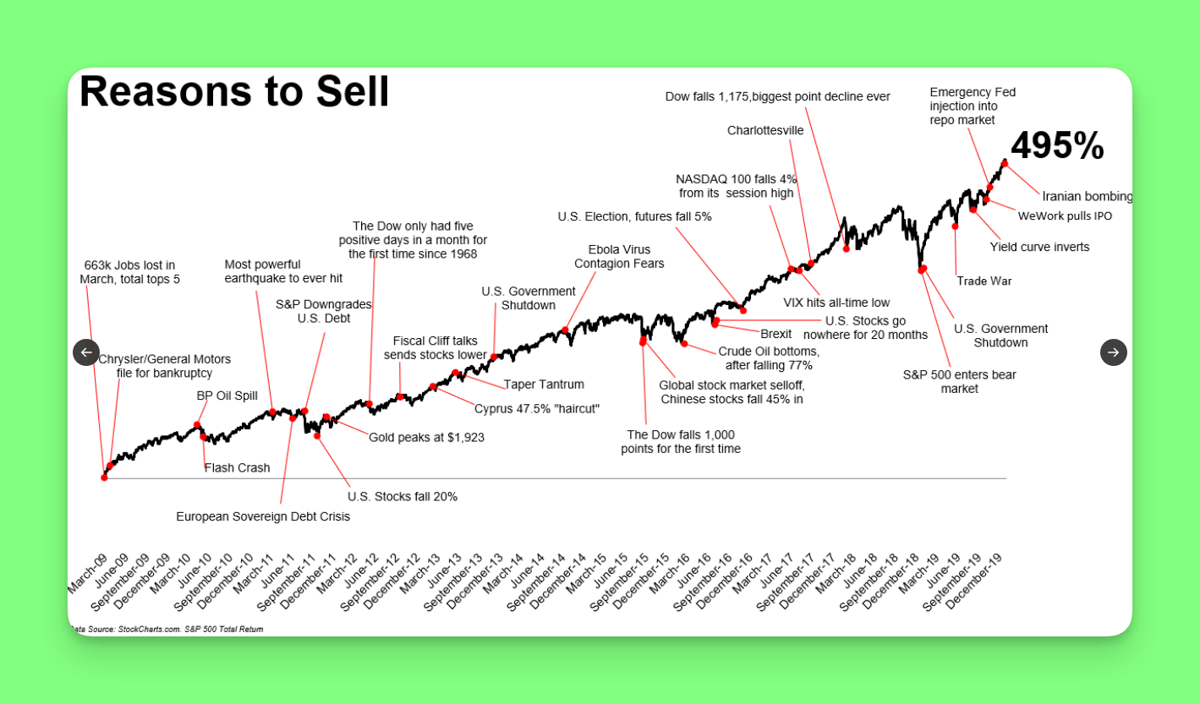
The real risk isn't investing and seeing a crash. It's waiting on the sidelines, watching prices rise while you try to predict the unpredictable. The chart below shows how, despite a constant stream of alarming headlines and seemingly “good reasons to sell,” the S&P 500 continued to climb over time, highlighting how reacting to short-term fear often means missing long-term growth.
What happens when you wait?
The hidden cost of waiting for a crash
We’ve been hearing since 2018 that a correction is coming. That it’s the end of a 10-year bull run. That “this time it’s different”.
Now imagine you decided to wait back then, and you’re still waiting today.
- You missed out on roughly 120% growth you could have earned by simply investing in a globally diversified stock portfolio.
- And for the market to be lower than it was in 2018, you’d now need a drop of roughly 55%.
That kind of fall can happen. But it’s rare. It’s in the ballpark of 2008-type events, not the kind of dip you can rely on showing up just because you’re waiting for it.
And while waiting may feel “safe”, it often isn’t. You might not be poorer in nominal terms because your savings balance didn’t shrink. But in real terms, inflation quietly eats away at it. Meanwhile, the person who invested and stayed the course pulled further ahead, without doing anything clever.
Here is what that quiet loss looks like over thirty years:
Imagine you have €10,000 ready to invest with a 7% annual return:
| Start year | Value after 20 years | Cost of waiting |
|---|---|---|
| Invest today | €38,697 | — |
| Wait 1 year | €36,165 | -€2,532 |
| Wait 3 years | €31,588 | -€7,109 |
| Wait 5 years | €27,590 | -€11,107 |
Every year you wait has a cost. You’re not just missing out on potential returns. You’re losing time, and time is the strongest driver of long-term growth.
Starting earlier gives compounding more time to work for you. Waiting only makes the mountain a bit steeper to climb.
When waiting can make sense
Most of the time, investing sooner is the right move. Time in the market matters. But there are a few situations where waiting is the smarter choice.
If you don’t have an emergency fund yet, are dealing with some debt, or know you’ll need the money again in the next few years, holding off can make sense. In those moments, investing often adds stress instead of peace of mind. It’s usually better to get the basics in place first and park your money into a savings account.
Once you’ve done that, waiting rarely helps. More often, it costs you returns rather than protecting you.
Invest monthly without stress
If putting a large amount into the market at once feels uncomfortable, you don't have to. Many new investors feel the same way. Monthly investing is a simple alternative. You put in the same amount every month, no matter what the market is doing. People often call this euro-cost averaging, also known as dollar-cost averaging.
Isn't it better to invest a lump sum?
Mathematically, yes, about two-thirds of the time. Vanguard studied 90 years of market data and found that lump sum investing usually beats spreading your money out monthly, because markets trend upward more often than not.
But here's what matters more than the maths: what you'll actually stick with. If investing €10,000 today makes you so nervous that you'll panic-sell during the first 15% dip, you're better off investing €1,000 per month for 10 months. A slightly lower average return that keeps you invested beats a higher potential return that pushes you out of the market.
When monthly investing makes sense
The idea behind it is straightforward. Prices move up and down all the time, and it's almost impossible to guess the perfect moment to invest. By spreading your investments across many months, you avoid having to make that decision.
Monthly investing helps you:
- Buy more when prices are low
- Buy less when prices are high
- Build a steady investing habit
- Feel less pressure to "get the timing right"
- Stay calm during market drops (you know you'll buy the dip automatically)
It also fits naturally with how most of us get paid. When your salary comes in, you invest a portion of it. That rhythm makes it easier to stay consistent.
What about when you have a lump sum sitting there?
Say you've just received a bonus, inheritance, or sold something valuable. You have €15,000 ready to invest right now. Here's a balanced approach: invest a meaningful portion immediately (maybe €5,000), then spread the rest over the next 3 to 6 months. This way, you get most of your money working sooner while still giving yourself time to adjust psychologically.
Over time, this consistency smooths out the ups and downs. You avoid the stress of trying to predict the market, and you focus on something you can control: showing up every month.
The best strategy isn't the one with the highest theoretical return. It's the one you'll actually follow for 10, 20, or 30 years.
Curvo helps you invest for the long run
When you sign up to Curvo, we ask you a few questions about your goals and how you feel about risk. Based on your answers, you’re matched with a portfolio that spreads your money across thousands of companies around the world. It’s diversified, built for the long term, and designed to reduce unnecessary stress.
From there, everything runs automatically. Your monthly contributions are invested for you. Your portfolio stays balanced. You don’t need to follow the news or guess where markets are heading. You can focus on your life while your money quietly works in the background.
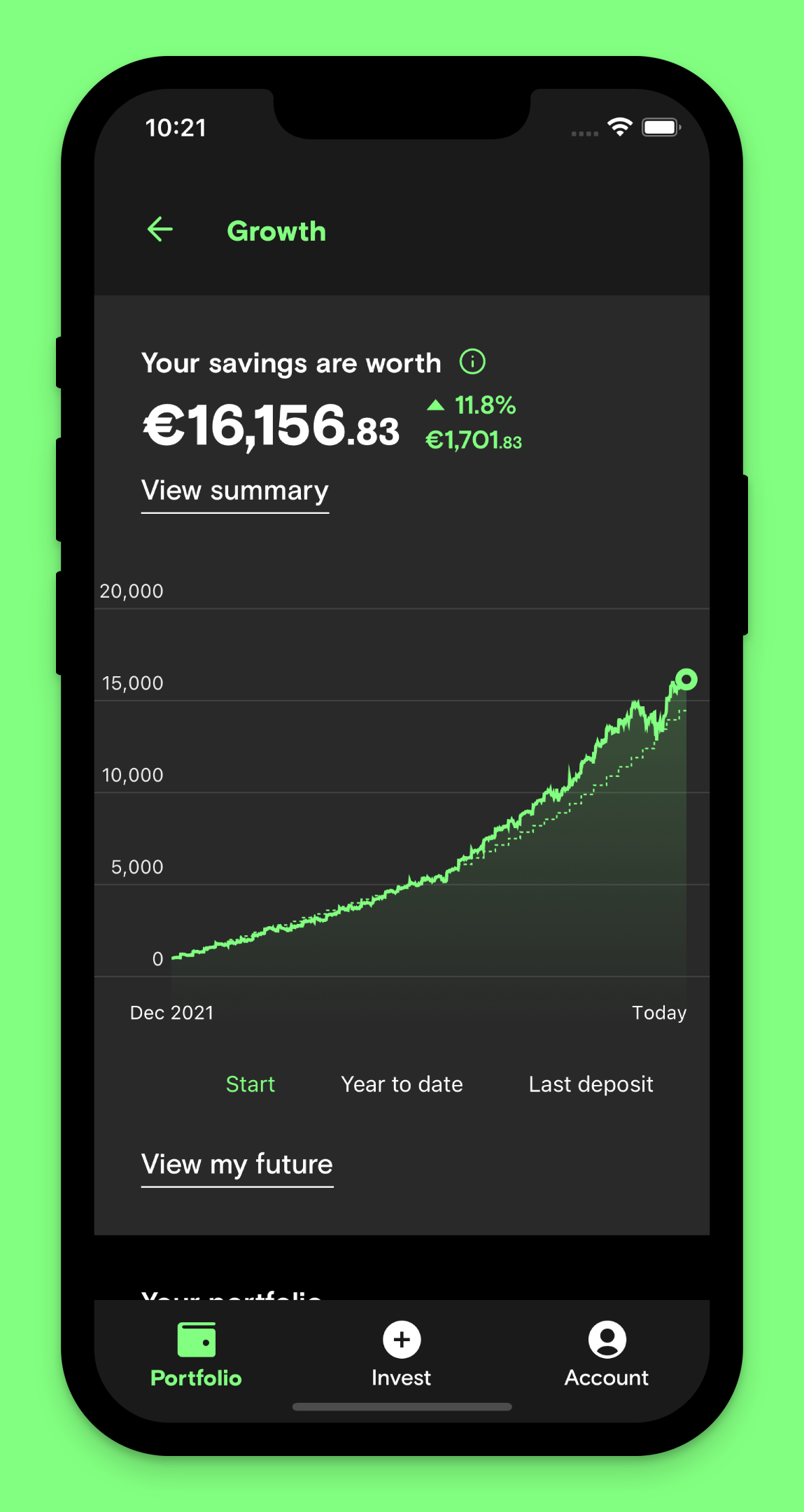
Whether you’re saving for retirement, a future home or simply want a bit more financial security, your portfolio grows with you at your own pace. It’s investing without the pressure of trying to time the perfect moment.
Summary
The question isn't whether markets will drop after you invest. They will, eventually. The real question is whether you'll stay invested long enough to benefit from the recovery that follows. Every major crash in history has been followed by growth, and those who stayed invested came out ahead.
Starting today isn't about perfect timing. It's about giving your money more time to grow through compounding. Even if you start small with monthly contributions, you're building a habit that compounds not just financially, but psychologically too.
You've now got the information you need. The next step is yours to take. Whether you choose to invest monthly or put in a lump sum, the important thing is to start. Apps like Curvo exist to remove the friction and help you stay consistent, but the decision to begin is what matters most. There's no perfect moment. But starting now is usually better than waiting another year.