


Why a buy-and-hold strategy works best when investing
Investing can feel overwhelming. Market news is constant, the next “hot stock” is always trending somewhere, and it seems like everyone has an opinion on whether you should buy or sell right now. It’s easy to get pulled into market timing, where you try to predict what the market will do next.
But in our experience, and in the data, one approach keeps proving itself: staying invested for the long term. A simple buy-and-hold strategy usually works far better than trying to jump in and out of the market.
At Curvo, we believe buy-and-hold is one of the most powerful ways to grow your wealth with less stress. Here’s why.
What is buy-and-hold (and why it fits naturally with index investing)
Buy-and-hold is simple: you invest in a diversified set of assets, usually through index funds or ETFs, and you hold them for the long term. You don't sell when markets fall or try to predict the next peak. You stay invested.
This pairs perfectly with index investing. Instead of trying to pick the next Apple or guessing which sector will outperform, you buy a slice of thousands of companies across the world. When the global economy grows, your investments grow too.
This is also why the portfolios in Curvo use globally diversified index funds. They're designed to be held for years, even decades.
Why buy-and-hold works
1. Time in the market beats timing the market
Trying to guess when markets will rise or fall is incredibly hard. Even professional investors often get it wrong.
When you stay invested, you avoid the biggest mistake market timers make: missing the market's best days. Historically, markets rise over long periods even though they can fall sharply in the short term. By remaining invested, you benefit from every recovery.
Buy-and-hold takes pressure off your shoulders. You don't need to react to every headline or make quick decisions. You simply follow your plan.
2. Compounding needs time to work
Compounding is when your gains start generating their own gains. It's one of the strongest forces in investing. But compounding only works if you stay invested. The longer your money remains in the market, the more powerful compounding becomes. A buy-and-hold mindset gives compounding the time it needs to deliver meaningful results.
3. Lower costs and less hassle
Trading often comes with costs. With a broker, each buy or sell order can carry a fee. Depending on your country, selling might also trigger taxes. Over time, these costs add up. Buy-and-hold avoids these unnecessary expenses. And if you invest in low-cost index funds, you also benefit from lower ongoing fees.
There's also the mental side. Active traders need to constantly monitor prices. That can lead to stress, anxiety, and regret. Buy-and-hold investors stick to their plan and ignore the noise. It's calmer and often far more effective.
4. Diversification makes your portfolio more resilient
Buy-and-hold usually goes hand-in-hand with investing in broad, global index funds. These funds hold thousands of companies across countries and sectors. This diversification protects you from the poor performance of any single company or industry. Even when certain markets struggle, others often compensate.
Over decades, global stock markets have repeatedly recovered from recessions, crashes, and crises. Diversification helps your portfolio ride these waves with less risk.
The historical returns of the MSCI World index shows clearly how buy-and-hold investors have been rewarded over time.
Why investing regularly supports a buy-and-hold mindset
Buy-and-hold works best when you invest money you won't need for at least 5 years. If you need the money sooner, keeping it in a savings account is usually safer. Many of us don't invest a big lump sum all at once. Not because it's wrong, but because it feels uncomfortable. When we first started investing, we also hesitated. What if markets dropped right after we invested everything?
That's why investing regularly, for instance every month, fits so naturally with buy-and-hold.
Investing becomes a habit
By investing when your salary comes in, you turn investing into a simple routine rather than a stressful decision. You don't need to analyse the markets or wait for the "right moment". You just follow the rhythm of your income.
It avoids regret
Trying to time the market often leads to second-guessing. When you invest regularly, you remove these emotional highs and lows. You follow your plan and avoid the painful "I should have invested last month" or "Why did I invest right before the dip?" thoughts.
It smooths out the journey
Markets jump around. Sometimes you buy at a high point and sometimes at a lower one. By spreading your investments, your average purchase price naturally smooths out. It's not about maximising returns, but about reducing the emotional burden that leads many investors to quit.
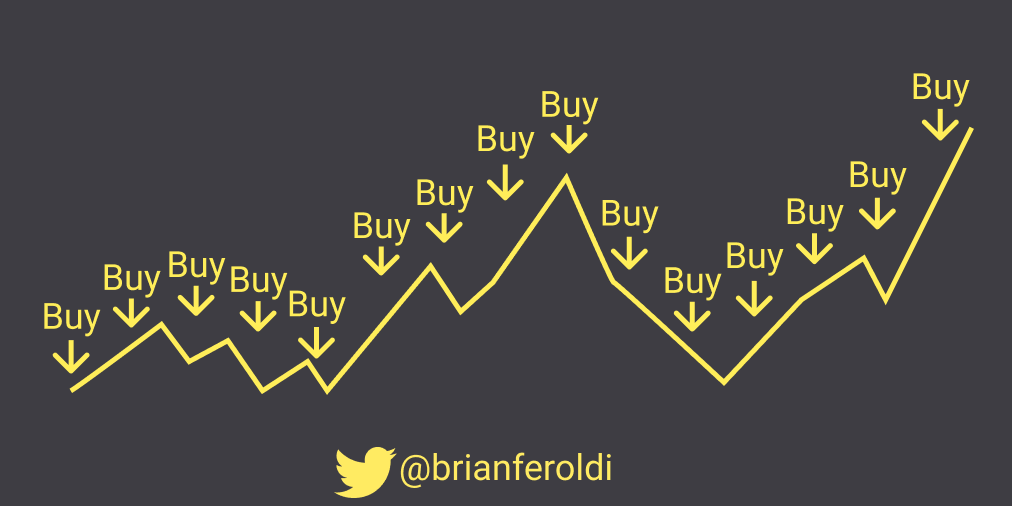
You also buy when the markets are low
Imagine you invest €200 every month for 10 years. Markets rise, fall, rise again. You end up buying at all kinds of prices. But because you stayed consistent, you remain invested through the recoveries, which historically is where most returns come from.
Regular investing supports the core message of buy-and-hold: stay invested, be patient, and keep things simple.
Curvo is ideal if you want a hands-off, consistent periodic investment plan into ETFs with everything automated from only €50. Discover how Curvo works.
How this ties into Curvo's approach
At Curvo, buy-and-hold isn't just encouraged, it's built into how we design your portfolio.
Here's what that looks like:
- Broadly diversified index funds. Your portfolio is invested across thousands of companies worldwide.
- Regular monthly investing. You can automate your monthly contribution. This keeps you consistent and removes the temptation to time the market.
- Low costs. Because fees matter. High costs eat into your long-term returns.
- A long-term mindset. You invest for years, not months.
Together, regular investing, diversification, and buy-and-hold make for a strategy that works for everyday Europeans who want to grow wealth without needing to become finance experts.
Why Curvo makes buy-and-hold easier to stick with
Sticking to buy-and-hold sounds simple, but in reality it's hard. Apps from brokers often push you to trade more because that's how they earn money. Notifications highlight daily price movements or promote "popular stocks". Before you know it, you're checking your portfolio every day.
Curvo is built the other way around. Our goal is to remove the noise.
- Your portfolio is automatically rebalanced.
- Your monthly contribution is automated.
- Fractional shares make sure every euro is invested.
- You don't have to pick funds yourself.
- You don't see confusing charts or flashing prices.
When the structure supports the strategy, staying the course becomes much easier.
Common concerns (and how to think about them)
But what if markets crash?
Markets do crash. It's part of investing. But history shows that markets also recover. When you invest for the long term, you give your money time to bounce back. Diversification helps too, since you're not relying on a single company or country.
Am I missing out on big winners by investing broadly?
Some individual stocks soar. But most don't. And predicting the winners is extremely difficult. When you invest in a global index, you automatically own today's winners and tomorrow's winners, without needing to guess who they'll be.
Is buy-and-hold too passive? Shouldn't I be doing more?
Buy-and-hold isn't lazy. It's disciplined. And discipline usually beats constant tinkering.
What if I invest a lump sum at the wrong moment?
This is a very common fear. And it's valid. Nobody likes the idea of investing right before a market drop. But here's what history shows: the longer you stay invested, the less your starting point matters. What matters more is that you start. Whether markets fall in the next month or rise doesn't change the long-term trend of global growth.
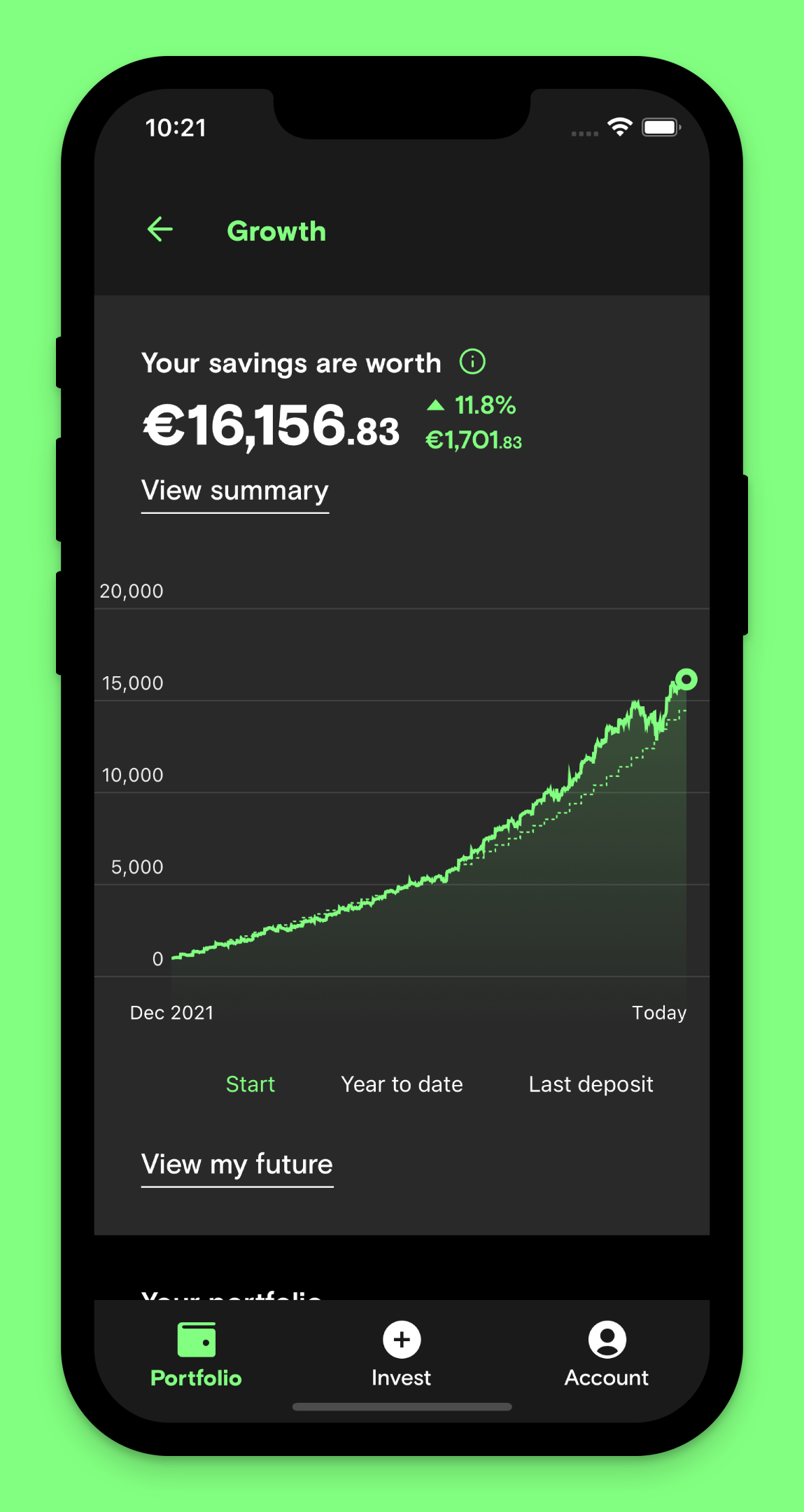
Rob's first deposit landed right before a run of geopolitical shocks. He held on and never withdrew a euro.
If putting everything in at once feels uncomfortable, investing monthly is a great compromise. You still follow a buy-and-hold strategy, but in a way that feels safer and more manageable.
What if my life situation changes?
Buy-and-hold doesn't mean you never review your portfolio. It simply means you don't react to short-term market movements. If your goals, income, or risk tolerance change, it's perfectly reasonable to adjust.
A calm strategy in a noisy world
The hardest part of investing isn't understanding the maths. It's managing your emotions. News headlines are dramatic. Markets move fast. Social media celebrates overnight success stories that make long-term investing feel slow. But underneath the noise, global markets have grown for decades.
Buy-and-hold is about trusting that growth. Not blindly, but because history, data, and experience all point in the same direction: patient investors are usually rewarded.
Summary
In a world that celebrates quick wins and flashy trades, buy-and-hold feels almost boring. But boring often wins. The long-term growth of global markets, the power of compounding, and the simplicity of staying invested are why buy-and-hold remains one of the most reliable ways to build wealth.
Curvo is built around this philosophy. We help you invest regularly, keep costs low, stay diversified, and remain confident through market ups and downs. You don't need to predict the next crash or pick the next star stock. You simply need time in the market.
If you're starting your investing journey or refining your approach, adopting a calm, long-term mindset might be the smartest decision you make.