


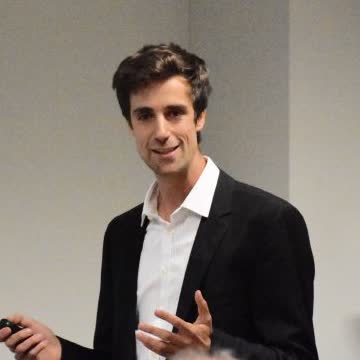
When Harry signed up in December 2021, Curvo was still a young product. Not many people were using it yet.
He'd had money sitting in a savings account for years, plus a few funds through his bank, a mix of equities and bonds. It worked, in the sense that nothing had gone wrong. But he'd never liked how the costs were bundled in.
It's logical that there are certain costs, but they're not always made explicit, and that's something I wasn't a fan of.
Curvo's flat, visible pricing was the opposite of that. He had his bank's fund fees to compare it against.
Around 1% in cost, which for people who aren't familiar with investing might sound like a lot, but compared to the other products I'd used, where you're always paying more through the funds, that really stood out to me.
Starting small, on purpose
Harry didn't come in with a plan. He noticed a pattern in his own spending instead.
I didn't overthink it, really. I noticed I still had money left over at the end of the month, so instead of it sitting in a savings account, I put it here instead.
He started with a modest monthly deposit, low enough that testing it out carried no real risk. That was deliberate. Before trusting an app with more, he wanted to see it actually work first.
From €200 to €1,500 a month
It did work, and over the next four and a half years his monthly deposit climbed steadily: €200, then €350, then €500, then €1,500 a month, plus a larger amount along the way.
Each increase followed the same logic as the first one. He'd see his balance, understand how his contribution related to his salary, and trust the app with a bit more.
I'd already been with Curvo for a few years, I'd seen it worked well, it was clear. It felt simple to go from a smaller amount to trusting it with more.
The larger deposit was a different kind of decision. Rather than drip-feeding it in over several months, Harry chose to invest it all in one go.
I did think about spreading it out because of market ups and downs, but in the end that was my way of investing that sum: putting it in at once, and just letting it ride from there.
Never a euro withdrawn
In four and a half years, and through periods where markets dropped, Harry hasn't withdrawn a single euro.
I've never felt the urge to pull money out at a bad time. That's really what I was looking for: not having to be very active, just knowing my money is being put to work.
He points to Curvo's backtested long-term track record as part of why he's able to stay hands-off. Markets fall, sometimes for a while, but the long-term trend has kept climbing since the Second World War.
The world does what it does. Markets go up, markets go down. But the costs stay limited, you have a clear overview, and the app is simple to use. It's minimalist, but I think that's really its strength.
Harry's advice for new investors
Looking back over four and a half years, Harry's advice to his past self is simple.
I'd tell myself to just go for it. It worked out well, it's clear, it's minimalist.
His bigger point is that most people don't need to become investing experts to get started.
A lot of people don't really know what investing, buying, selling, or the stock market even means. Curvo is a good tool for that, with honest and transparent pricing.
You might be wondering
Should I start small if I'm new to investing?
Harry started with a modest monthly deposit specifically to test the platform before committing more. Over four and a half years, as he saw it working, he increased his deposit from €200 to €1,500 a month. Starting small and scaling up as trust builds is a common, low-risk way to begin.
Should I invest a lump sum all at once, or spread it out?
Harry considered spreading a €10,000 lump sum over time to manage market-timing risk, but ultimately invested it in one go. "That was my way of investing that sum: putting it in at once, and just letting it ride from there."
What happens to your investments when the market drops?
Harry has never withdrawn a euro in four and a half years, including during market downturns. He points to Curvo's backtested long-term data, which shows markets recovering over time, as part of why he's comfortable staying invested through the dips.